
At some point, most of us have benefited from a medical breakthrough we knew nothing about — a drug that didn’t exist when our parents were diagnosed, a procedure that replaced one far more dangerous, a test that caught something early enough to matter. What most people don’t know is where those breakthroughs come from. They come from academic medical centers. And for the first time, one is taking root here in Palm Beach County — at your hometown university.
If your physician has ever told you about a new treatment, a better diagnostic tool, or a therapy that did not exist a decade ago, there is a good chance it came from an academic medical center. These institutions do something that clinics and community hospitals cannot easily sustain: they protect the time and resources for research that has no guaranteed outcome — and no guaranteed profit. Florida Atlantic University’s Schmidt College of Medicine — the only medical school in Palm Beach County — is one of them.
Academic Medicine Protects the Freedom to Pursue Discovery
The breakthroughs that change medicine rarely come from somewhere obvious. They tend to come from researchers who were asking a different question entirely — one that did not have a clear commercial application, a guaranteed timeline, or a known destination. Academic medical centers are built to protect exactly that kind of inquiry. Johns Hopkins, Mayo Clinic, Duke, Emory, and MD Anderson have defined American medicine for a century by doing exactly this — and so does Florida Atlantic University.
It was that infrastructure at Emory that ultimately identified the brain circuit underlying Parkinson’s disease, opening the door to deep brain stimulation. It was decades of T-cell biology at MD Anderson — research not aimed at any particular cancer — that produced the first immune checkpoint inhibitor, a therapy that has since changed the prognosis for hundreds of thousands of cancer patients worldwide.
None of this is guaranteed — that is the nature of science. But the infrastructure that makes it possible is being built in Palm Beach County. Here is one example of what that looks like.
The Disease No One Talks About — And the Research Happening Right Here
I’ll start with a word most people have never heard: amyloidosis. That is exactly the problem. It is a disease that affects millions of Americans — including many in this community — and most of them do not know it until significant damage has already been done.
Amyloid is an abnormal protein that builds up across multiple organ systems simultaneously — in the brain, where it is the hallmark of Alzheimer’s disease; in the heart, where it causes a form of heart failure that is frequently mistaken for other conditions; and in the kidneys and liver. For decades, physicians and researchers studied these manifestations in isolation — neurologists focused on the brain, cardiologists on the heart — without fully connecting them to the same underlying disease.
The FAU Amyloidosis Project was built to change that. Established through an $11.5 million commitment from Ann and the late John Wood of Boca Raton, it brings together researchers and clinicians who study amyloid not organ by organ, but as a whole-body disease. Now in its third year, it brings scientists from across North America and Europe to work on treatments that do not yet exist. Physician-scientists affiliated with the Marcus Neuroscience Institute at Boca Raton Regional Hospital are part of that work. This is research happening in this community, for this community.
In the columns ahead, we will go deeper — into what the latest science says about protecting your brain, what addiction actually looks like in communities like ours, and what artificial intelligence is already doing inside your doctor’s office. None of it requires a medical degree to understand. All of it is relevant to the decisions you and your family are making right now. This community deserves honest answers to questions like these. We are working on them here.
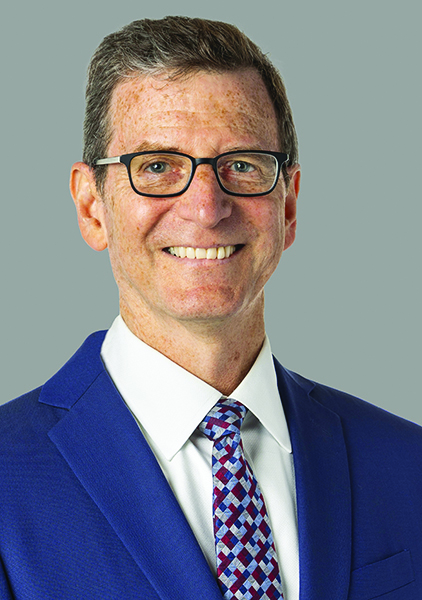
Lewis S. Nelson, MD, MBA, is Dean and Chief of Health Affairs at Florida Atlantic University’s Charles E. Schmidt College of Medicine, the only medical school in Palm Beach County. He is a nationally recognized expert in medical toxicology and a co-editor of Goldfrank’s Toxicologic Emergencies, the definitive reference in the field.