
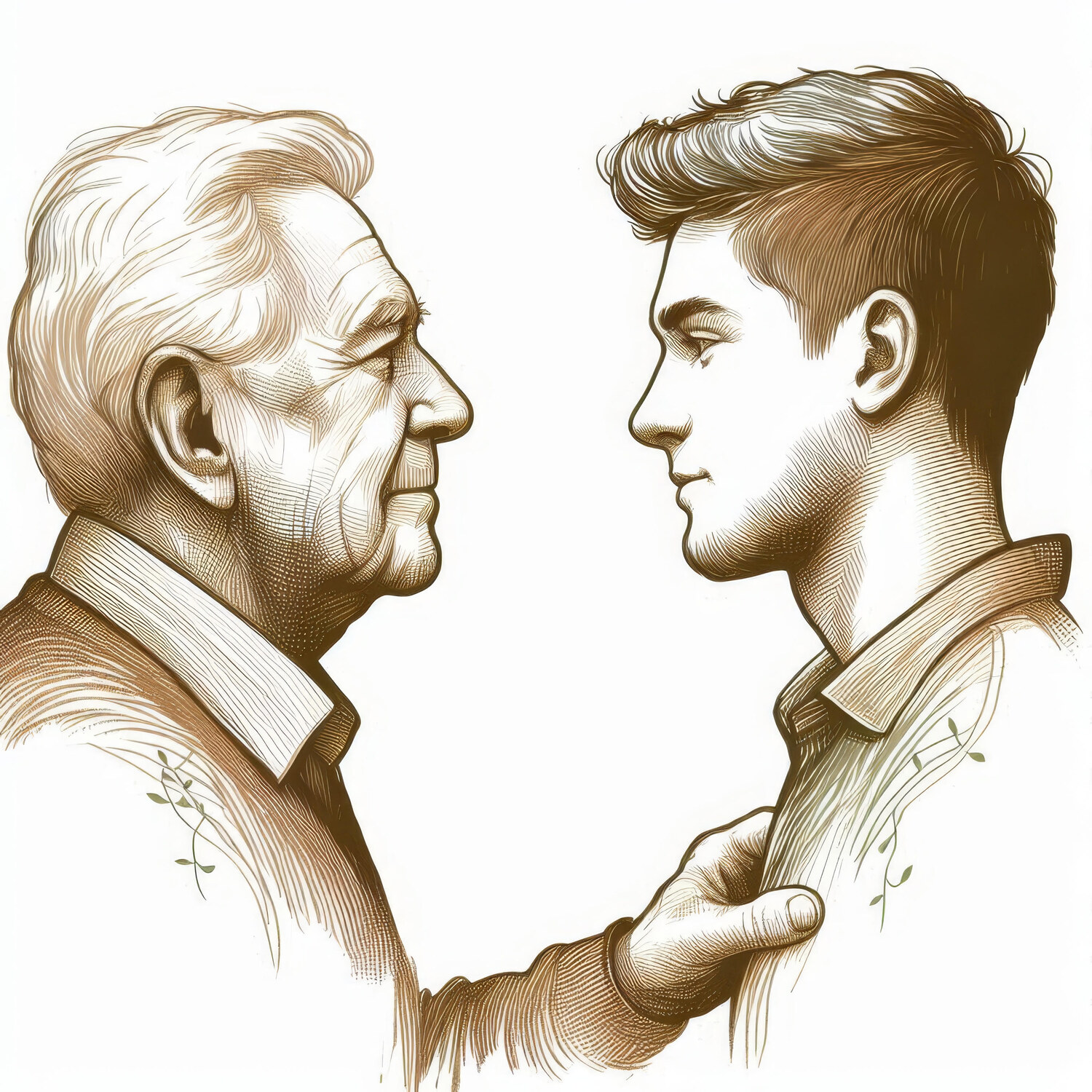
My Millennial grandchildren are convinced the American Dream that launched my generation has departed, leaving them only its fumes. When we discuss the future and what they believe it holds for them, they talk of financial uncertainty that makes it too risky to marry or own a home.
Two of my grandsons are in long-term relationships with the women they plan to marry. Both say they have no choice but to delay marriage until they and their partners are financially secure enough to afford the home they want to live in.
I respect their feelings too much to offer advice that worked for my generation but would likely glance fruitlessly off the problems they face. I didn’t hand them off to their parents when they were babies and cried, and won’t attempt to reassure them as adults with advice I fear is outdated.
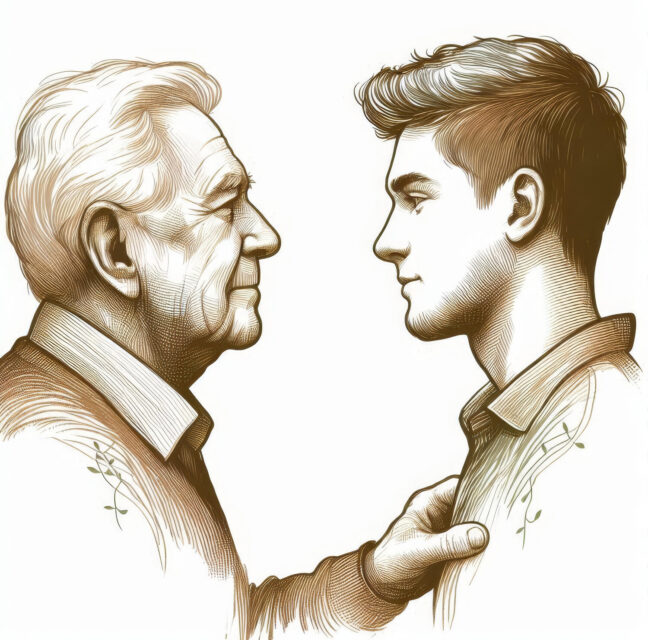
At the same time, I feel the familiar impulse to comfort my grandchildren as I did when they were little. Comforting an adult in their thirties or forties requires more than a tender embrace and soothing whispers.
I’m three years from my hundredth birthday and whatever wisdom I’ve gained tells me only love is capable of leaping across the chasm that divides our generations. Advice doesn’t have love’s wings and would fall into the abyss. On one side of that abyss is marriage; on the other is living with a partner without that bond.
The marriage vow is a covenant that welds two people into one unshakeable presence. Problems neither my wife nor I could solve alone surrendered to our oneness.
In the nearly seventy years we were married before I lost her, Muriel’s confidence in me swept aside my uncertainties. I soared on leaps of faith I hadn’t risked before we married.
Muriel had dropped out of high school, but within weeks of our marriage began the journey that led her to a Ph.D. She often said she saw no reason to return to school until we married and she was captivated by my love of learning.
What I understand of Millennials comes from my grandchildren. I know my grandsons and their partners love each other. They live together by choice and are happy they do.
But, nothing bonds two people more tightly than marriage. I loved being married and saying the words “my wife” and hearing Muriel say “my husband.” You reserve those words for someone whose soul touches yours. “My partner” is something you say in an office.
Muriel and I emerged from our wedding more complete than the two individuals who walked down the aisle alone. Aspirations previously beyond our reach began to appear too modest. We began taking risks, embarking on careers that would put us into competition with the best and brightest.
I hope my grandsons forge that oneness with their partners. I’m certain the welding of two individuals into one unified presence will bring confidence and hope to where there is now uncertainty.
There is little more exciting than two people becoming one, bonded with certainty that “If there’s a way to afford a home, we will find it together!”
I wanted to reassure my grandchildren that every generation confronted problems that seemed erected solely to dim their dreams.
Our grandchildren spent enough time with Muriel and me over the decades to know the oneness of our marriage. They heard from their parents how little money we had through the first years of our marriage. Worries about unpaid bills kept me awake until I was in my mid-thirties.
We were able to drive through financial stress for only one reason, we welded ourselves into one being in pursuit of the dreams we shared.
I hope my grandsons and their partners embrace the covenant of marriage, bonding themselves into the oneness that will fulfill their dreams.
Bob’s articles have appeared in The New York Times, The San Francisco Chronicle and in Next Avenue, the publication of the Public Broadcasting Service. His book, “What’s Stopping Me From Getting Ahead?” was published by McGraw Hill and is in five languages.