



Human nature is a fascinating phenomenon, often defying our misunderstandings and challenging our perceptions of people and their surroundings.
It was in 1896 that French naturalist Jean-Henri Fabre began his famous processionary caterpillar experiment. Fabre noticed that the processionary caterpillars were named because of their endless, head-to-tail, follow-the-leader pattern. So, he placed the processionary caterpillars in a circle on the rim of a large flowerpot with their food in the center.
The caterpillars, driven entirely by instinct, marched mindlessly in circles for seven days before succumbing to exhaustion, starvation, and eventually death. When all they had to do was stop their senseless circling and head toward the food placed less than a few inches away.
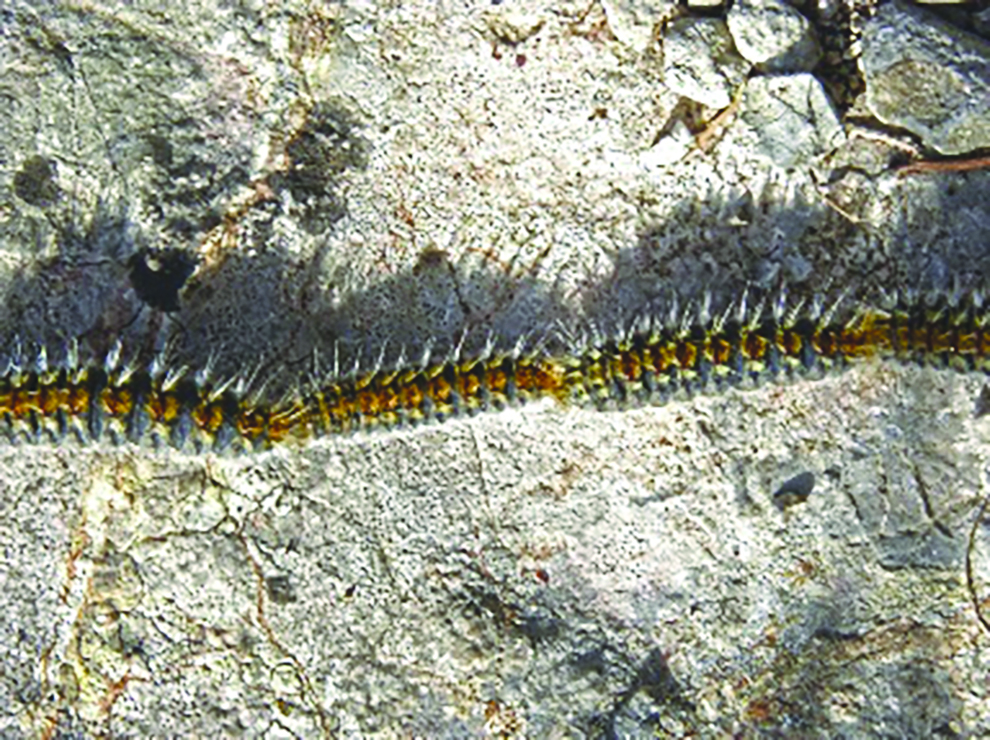
This intriguing behavior of processionary caterpillars bears an uncanny resemblance to negative human behaviors that often lead to negative consequences. Like the processionary caterpillars, we often are caught in repetitive patterns for many reasons despite consciously knowing the outcome and/or their effects.
Many of our behaviors, like those of the processionary caterpillars, are devoid of truth, or the truth is ignored, which reveals the dangers behind our stubbornness and resistance even when we are aware that following previous patterns will lead us down a destructive path.
And, like the processionary caterpillars whose inability to STOP and alter their destructive outcomes, we often proceed down paths that lead to missed opportunities, conflicts, and misunderstandings, causing disappointment, stress, and anxiety.
Another example of following a destructive pattern is the person who mindlessly travels down the same road to get to their destination. Only this time, they notice there is a hole and, not wanting to take another path, they travel down the road only to fall in. Now having to crawl out, they ignore the experience of falling in the hole and take the same road the next day, only to experience falling in and having to crawl out again. This occurrence happens repeatedly until they realize their resistance to change and find another road.
Ridiculous, we may be thinking, but how many times do we resist change because we do not want to give up being comfortable?
The cautionary tales of both stories are reminders, prompting us to reflect on our thoughts, words, and behaviors that no longer work and take action to correct course before we find ourselves digging ourselves out of holes or starving ourselves to destruction.
Now here’s a thought to remember! Josette Veltri, a Boca Pointe resident, is a certified educator and coach on loss and transition. Her purpose is to assist clients in healing and moving forward so they can go from I Can’t to I Can, One Step at a time. She can be reached at [email protected] (https://www.linkedin.com/in/josettejveltri/)