
On April 23, 2025, the world will observe Yom HaShoah, Holocaust Memorial Day, a time to reflect on the immense loss suffered by millions and to honor the resilience of those who survived. When guests enter my home, they are greeted by a wall that resembles a museum exhibit—a testament to the intricate layers of history embedded in my family’s legacy. Prominently displayed are a violin, ceramic pears, and framed chess pieces. Among these artifacts hangs a poignant collage. At its center is a photograph of my father as a young boy seated with his parents and his four siblings. The eye is drawn to an image of a cattle car and a charred piece of paper marked with a stark red “Z,” indicating their seven names crossed off a list written in German. Tucked behind this list are five 100-mark German bills stamped with the Nazi insignia. A solemn plaque serves as a reminder of the Jewish community of Michalovce, Slovakia, who perished in the Holocaust. My grandmother’s hand points toward a postcard of the SS Queen Elizabeth, a Cunard ocean liner known for its transatlantic voyages between Europe and America.
Adjacent, a second collage intertwines images of my son at his bar mitzvah with those of his namesake, my father, at his own coming-of-age ceremony, bridging the generations with a celebration of survival, tradition, and continuity. Artifacts from my son’s celebration sit beside my father’s naturalization papers, his Slovakian birth certificate, and a map of Slovakia, anchoring our family history in tangible objects.
This wall is more than a collection of memorabilia; it is a tribute to the past I have inherited. Though born and raised in America, my story is inextricably linked to the one that began decades earlier—when my father’s family was pulled from cattle cars just moments before a death-bound train carried away both of my grandparents’ fathers, along with two of my grandmother’s sisters and their families. The resilience of my father and grandparents has shaped my identity, weaving together the enduring legacy of my ancestors with the promise of a new life in America.
On May 21, 1949, my father, then just 11 years old, and his family boarded the SS Queen Elizabeth, embarking on a journey across the Atlantic toward an uncertain future. During the voyage, my father eagerly learned his first words in English: “Don’t mention it,” a phrase he would repeat with excitement, embracing the adventure ahead. Five days later, they arrived in New York City, where the Statue of Liberty welcomed them as a beacon of hope and opportunity. The boxes they had sent ahead were nearly empty upon arrival—except for one cherished item: a violin from Prague that my father had once played briefly. Today, that violin hangs in my home’s entryway, an enduring symbol of resilience, continuity, and the unbreakable threads of survival.
Growing up, I often heard my father recount his “adventure” stories—tales of hiding from the Nazis behind bushes, escaping roundups by playing soccer with unsuspecting German soldiers, and surviving in a cave where he and his family slept for months on hard rocks, ate wild pears, and played chess with a set carved by my grandfather. My father spoke with excitement and pride, as if narrating a thrilling childhood escapade. But no matter how much he tried to romanticize those years, my father could not conceal the trauma they left behind. He refused to use a pillow, preferring to sleep on a hard mattress; he never ate pears; he was wary of strangers. He took immense pride in his Slovakian roots, passionately following the country’s professional tennis and soccer players, yet he was too afraid to return to visit.
My father sought to leave the past behind, embracing his American identity and raising American children. He was devoted to us, yet he carried profound loss, scarcely recalling his murdered relatives except for faint memories of riding on a horse and buggy with his grandfather during seltzer deliveries. The weight of his unprocessed grief fell upon me, leaving me with an indefinable void. Often, I would catch him staring off into the distance, his mind seemingly trapped in another time and place. The guilt of survival weighed heavily in his eyes, and without words, my father imparted to me a deep sense of duty—to remember, to carry forward the stories, and to honor those who were lost.
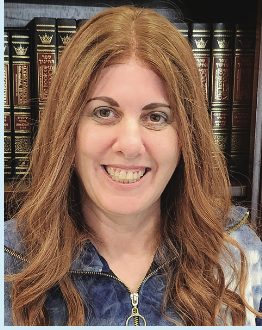
As Yom HaShoah approaches, I reflect on this legacy I bear. I feel the weight of memory pressing upon me, compelling me to share these stories. My father’s journey was not just one of survival but of perseverance, of choosing to build a new life despite the ghosts that followed him. The wall in my entryway is more than a collection of artifacts—it is a declaration that we remember, that we exist, that we honor the past while embracing the future. Ilene Brookler, a Boca Pointe resident and Columbia Law School graduate, brings over 30 years of litigation experience to her role as a certified mediator. She founded Family First Divorce Mediation Services with the goal of helping families navigate divorce quickly and affordably. She can be reached at [email protected]. For more information, visit http://www.familyfirstmediate.com.