

You’re a reader. ‘ever wonder what it’s like to be a writer? It’s harder than reading. And depending on what kind of writing, it’s getting even harder. Here’s why.
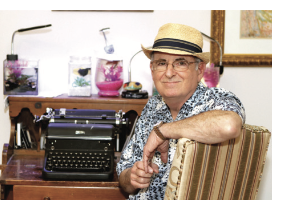
I’ve been writing professionally for about 55 years. I’ve had over 900 opinion pieces published and five books. I’m a frequent contributor on Substack and on my blog (WordPress, “At Least From My Perspective”). I’m about 85% of the way through my next book. One might say that I’m an obsessive writer. I grew up in a household where the mantra was that children should be seen and not heard. Writing became my mode of self-expression. My mother was very opinionated; I got it from her. My roommate in college once yelled at me, “You aren’t always right—you just sound right!” I’ll take it.
I’ve turned out a lot of words. I’m a very good typist. During my career, I typed faster than some of my secretaries. I was the first field officer of my agency to get an electric typewriter, an IBM Selectric, because I typed so well. I loved it. About 10-12 years ago, I began using a typing program called Grammarly. It tells the writer what is wrong on a page and offers suggestions on grammar, syntax, and rewrites. It also tracks words. Since I’ve started using it, I’ve written over 11 million seven hundred thousand words. Lord knows what my career total would be.
Tools such as Grammarly are a godsend to people like me. When I was in elementary school, the NY Board of Education decided it was unnecessary for students to learn how to diagram sentences. My teacher, corn-colored-haired Mrs. Nellis, reacted as if the world were coming to an end. She was close to right as far as English was concerned. I was the first generation out of school not to know a blessed thing about grammar. I’ve learned a bunch over the years, but I have this thing with commas. My writing sounds very much like my talking, so every time I feel a pause, I put a comma. I try hard to do better, but I either come out with too many or too few in the finished product. Grammarly makes it right. I have a few other foibles that the “G” inside my computer handles for me.
And according to a dear friend, an Evangelical pastor and prolific writer, I have a gift. I tend to think about what I’m going to write for several days. Sometimes I’m aware of it, sometimes not, but when I start writing, the ideas come out in order. For an article, they just seem to flow from my brain to my fingers and spill out of my hands onto the keyboard. I know writers who would give up a finger or two for that gift. It is a blessing.
There are two issues a writer has to deal with. They are opposites. One is writer’s block. That’s when you can’t seem to get the words to come out, or you can’t think of what you want to write. I don’t suffer from that. A mentor of mine said, “If you have eyes and ears, you always have something to write about.” Truth! The other issue is when you have so much to write about, you can’t keep up. That’s today’s problem. There are so many important issues facing the country that a writer could write pieces all day, every day, and not keep up. (FYI, I put two commas in that sentence that Grammarly slapped my hand for.)
The other hurdle for writers is the change in the publishing industry. Today, it is almost impossible to get a name-brand publisher for a book unless you can tick one of these boxes: you’re famous, you’ve already written a hit book, or you have an idea for a DIY book that’s a hot topic. Do-it-yourself books are the most popular non-fiction writing in this country.
Those of us who don’t have a box or two after our names have three other options. One is the hybrid publisher, a publishing house with which the writer shares expenses. Another is the vanity press. That’s exactly what it says. The writer’s ego is such that he or she will pay a lot of money to have their book published. With both hybrids and vanity presses, the writer has to bear the brunt of the most difficult part of writing—the marketing of one’s work. Finally, there’s self-publishing. There are many places that will do that, many for a hefty price. Unlike a hybrid house where one deals with people, self-publishing is generally you and some nameless, faceless person at another computer. Amazon has become the 500 lb. gorilla in the field. The book I am now working on will be self-published through Amazon. The one thing an author gives up with Amazon is a lot of control over the material. On the other hand, it is one-stop shopping, and the companies that are good at it, like Amazon, do a really good job. Someone said to me, “But your book will only sell on Amazon.” My retort was, “And the bad news is…?”
Once upon a time, I was related to the gargantuanly successful playwright Neil Simon by marriage. I lost him in the divorce. Before that, however, I had sent him a few things I had written. He was kind enough to respond and kind enough to tell me he thought what I wrote was good. Then he concluded by pointing out many reasons about being a writer that amounted to, “Anyone who wants to be a writer is nuts.” (He rewrote his first play, “Come Blow Your Horn,” 14 times, first capital letter to last period!) The final point was, “And if that makes sense to you, you’ll never be a writer.”
As I add another 1,003 words to my total, I’m signing off with greetings from the nuthouse. Columnist and author Bill Gralnick was born and raised in Brooklyn, NY. He recently finished a humorous memoir trilogy. The first book is “The War of the Itchy Balls and Other Tales from Brooklyn.” The second is “George Washington Didn’t Sleep Here.” The recently published third is, “That’s Why They Call It Work.” He is currently working on a novel. His books are available on Amazon and his other writings at https://www.williamgralnickauthor.com.